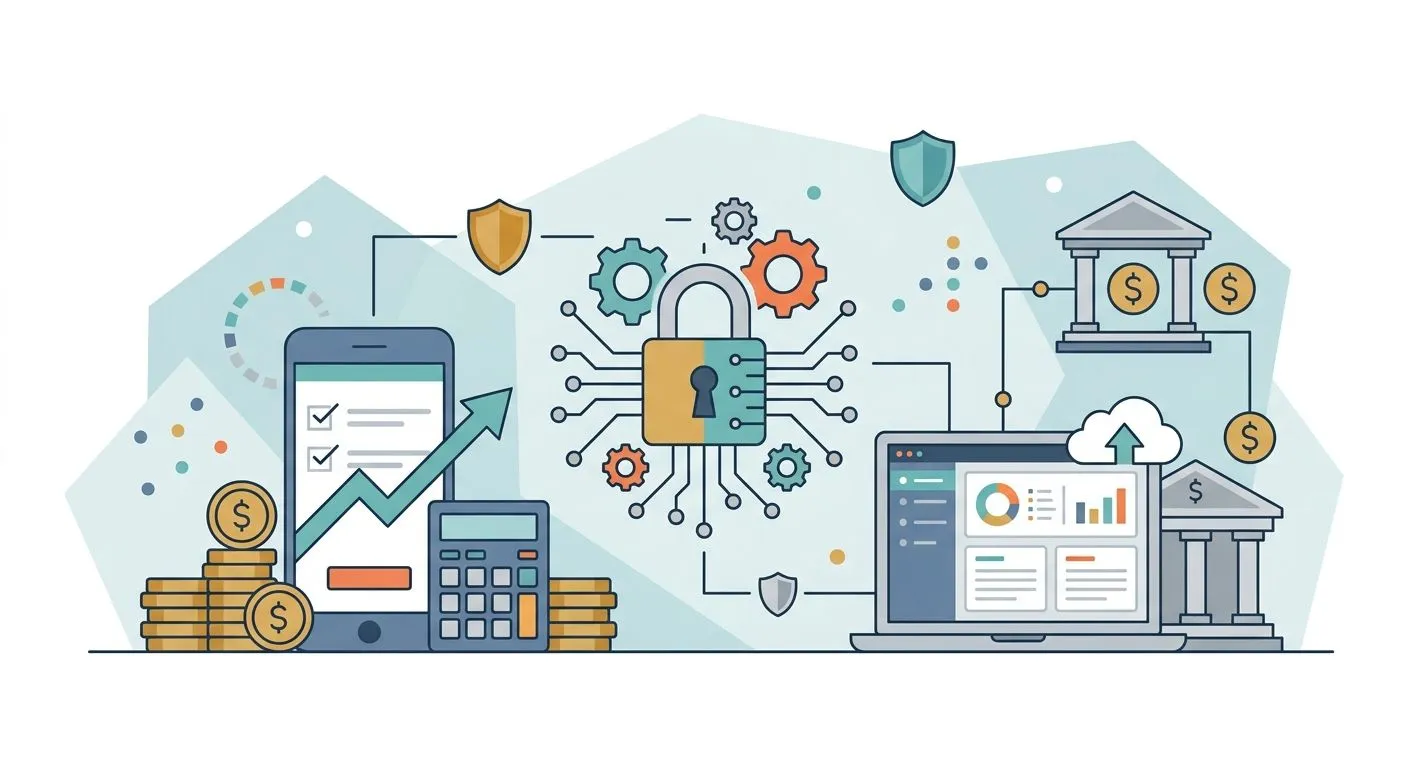
Compliance automation for fintech lenders is software that collects, monitors, and evidences the security and risk controls consumer credit and payment firms need for ISO 27001, SOC 2, and DORA — with the aim of cutting audit prep from months down to weeks. Lenders carry a heavier compliance load than most software businesses: FCA oversight, DORA's ICT risk rules, payment processor security reviews, and standard cyber certifications all stack on top of each other, and none of them wait for you to catch up.
Why compliance automation matters for fintech lenders
A typical consumer or SME lender in 2026 is running ISO 27001 for enterprise deals, SOC 2 for US partners, PCI DSS if cards touch the platform, and DORA if any EU counterparty is in scope. Add GDPR obligations around credit data and you've got four frameworks with heavily overlapping but not identical control sets.
Manual evidence collection means the same access control screenshot gets pulled four separate times, once per audit. That's not a compliance problem, it's a headcount problem dressed up as one.
Vendor risk management software for fintech companies exists precisely because lenders lean on third-party payment rails, KYC providers, and cloud infrastructure, and every one of those vendors needs its own risk file. Automating that layer alone removes a chunk of the manual load risk teams carry into every board update.
The verdict: lenders running two or more frameworks at once hit a wall with spreadsheets around the second audit cycle, not the first. Automation earns its keep exactly there.
DORA changes the maths for payment institutions
The Digital Operational Resilience Act applies directly to payment and e-money institutions operating in the EU, with the enforcement deadline landing in January 2025. It doesn't need domestic transposition — it's directly applicable. Lenders with EU exposure need an ICT risk register, incident reporting workflow, and third-party risk oversight in place, and DORA compliance for payment and e-money institutions walks through what that register actually needs to contain.
Build your compliance automation stack: the steps
Map your regulatory obligations first
Before any tooling decision, get a straight list of what actually applies to your lending business in 2026.
- FCA authorisation requirements relevant to your permissions
- DORA scope, if you serve EU customers or route payments through EU rails
- PCI DSS scope, if cardholder data touches your systems directly
- ISO 27001 or SOC 2 requirements from enterprise or institutional partners
- GDPR obligations tied to credit decisioning and customer data
Build a single control library across frameworks
Most of ISO 27001, SOC 2, and DORA's ICT risk requirements overlap on access control, encryption, incident response, and vendor oversight. Map them once instead of four times.
- List every control required across your active frameworks
- Tag each control to the frameworks it satisfies
- Identify the 20-30% of controls that are framework-specific
- Assign one evidence owner per control, not per framework
Automate evidence collection from your stack
This is where manual effort peaks and where automation earns the fastest return. Pulling access logs, patch records, and encryption configs by hand every quarter doesn't scale past a handful of frameworks.
- Connect cloud infrastructure, identity providers, and endpoint tools to automated evidence collection
- Set evidence refresh cycles that match audit windows, not calendar quarters
- Flag stale or missing evidence automatically rather than during audit week
- OneClickComply automates this evidence collection across ISO 27001, SOC 2, and Cyber Essentials in one pass, so the same access control proof satisfies every framework it applies to
Assign risk ownership across the lending team
Compliance automation doesn't remove the need for named owners — it removes the need for owners to chase evidence manually.
- Assign a risk owner for credit decisioning systems
- Assign a risk owner for payment processing and card data
- Assign a risk owner for third-party vendor risk
- Review ownership every time headcount or vendor relationships change
Monitor vendor and payment processor risk continuously
Lenders depend on payment processors, KYC vendors, and cloud providers that each carry their own risk profile. A one-off vendor questionnaire at onboarding tells you nothing about month eight.
- Run initial due diligence on every payment and data processor
- Set a review cadence tied to vendor criticality, not a flat annual schedule
- Track subprocessor changes, not just top-level vendor relationships
- Automate re-assessment triggers when a vendor reports a breach or certification lapse
Prepare for DORA and FCA reporting cycles
Regulatory reporting has fixed deadlines. Compliance automation should surface what's due before the deadline, not after.
- Maintain an ICT third-party risk register updated in real time
- Log incidents against DORA's classification thresholds as they happen
- Keep a rolling record of resilience testing results
- Automate reminders ahead of annual FCA and DORA reporting windows
Automate renewal and surveillance audits
Certifications don't end at the certificate — ISO 27001 runs on annual surveillance audits, and Cyber Essentials needs yearly renewal.
- Track certification expiry dates against renewal lead times
- Automate evidence refresh ahead of each surveillance audit
- Keep a change log of control updates since the last audit
- Use ISO 27001 risk assessment template for fintech firms as the starting structure for each annual review rather than rebuilding from scratch
Automate fintech compliance end-to-end
See how OneClickComply handles ISO 27001, SOC 2 and DORA evidence in one platform.
Comparison: compliance options for fintech lenders
| Option | Best for | Key limitation | Verdict |
|---|---|---|---|
| Spreadsheets and shared drives | Lenders running a single framework | Breaks down past two overlapping frameworks; no audit trail | Skip past framework one |
| Generic GRC platform | Larger lenders with a dedicated compliance hire | Built for broad enterprise use, not fintech-specific control mapping | Hold unless already staffed |
| Big four consultancy retainer | Lenders needing hands-on advisory alongside certification | High ongoing cost for evidence work that could be automated | Hold for advisory only |
| OneClickComply | Lean lending teams without a full-time compliance function | Doesn't replace advisory judgment on framework scoping | Buy for evidence automation |
OneClickComply is best for fintech lenders under 200 staff that need ISO 27001, SOC 2, or Cyber Essentials evidence automated without hiring a dedicated compliance team.
Common mistakes fintech lenders make
- Treating DORA as an EU-only problem. If any payment rail, subprocessor, or customer base touches the EU, DORA's ICT risk requirements apply regardless of where the lender is headquartered.
- Re-collecting the same evidence per framework. Access logs and encryption configs satisfy ISO 27001, SOC 2, and DORA controls simultaneously when mapped correctly — collecting them four times wastes the same hours four times over.
- Skipping vendor re-assessment after onboarding. Payment processors and KYC vendors get approved once and never reviewed again until a breach forces the question.
- Starting DORA prep the month before a reporting deadline. ICT risk registers and incident classification processes take longer to build than lenders expect once real transaction data is involved.
- Letting certification renewal slip. Cyber Essentials needs annual renewal and ISO 27001 needs surveillance audits — missing either resets trust with partners who rely on the certificate.
Frequently asked questions
One last thing
ISO 27001 and SOC 2 overlap heavily on access control, encryption, and incident response — most lenders don't realise how much of that evidence only needs collecting once until they map it. The second framework is rarely the hard one; it's the third that either breaks a manual process or proves the automation was worth building in 2026.