
A GDPR data protection impact assessment has no standard statutory tariff in the UK; your budget depends on the processing you assess, the expertise you need and the work included. The assessment fee does not necessarily cover changes to your systems, contracts or working practices. For a 2026 budget, separate the assessment from the work needed to reduce the risks it identifies.
Why this matters
You need a usable decision, not just a completed template. A DPIA should explain what your project does, how it affects people and which safeguards make the processing acceptable.
Start with an accurate description of your processing. Your record of processing activities provides a useful starting point, but the DPIA must examine the particular project and its risks.
Compare the scope before you compare the quote. A document review and an assessment that includes interviews, technical evidence and follow-up advice are different purchases.
How much does a GDPR data protection impact assessment cost?
The cost depends on who performs the assessment and what they must investigate. An internal assessment uses staff time; an external assessment adds professional fees, while either route can leave implementation work outside the assessment budget.
For a UK project in 2026, build your budget around these work packages. Ask each provider to identify which packages its proposal includes.
| Work package | What you are budgeting for | What to confirm |
|---|---|---|
| Scope and screening | Establishing the project boundaries and whether a DPIA is required | Which processing activities and systems are covered |
| Evidence gathering | Understanding data flows, suppliers, access and retention | Who supplies documents and answers questions |
| Assessment | Examining necessity, proportionality and risks to people | Whether the provider challenges the design or only reviews paperwork |
| Safeguards | Identifying measures that address the risks | Whether recommendations include practical implementation requirements |
| Review and decision | Recording advice, remaining risks and the controller's decision | Who reviews the assessment and who authorises the project |
| Follow-up | Checking changes and updating the assessment | Whether revisions and further advice are included |
The budget should distinguish between producing recommendations and implementing them. Changing access permissions, reducing data collection or revising a supplier agreement requires work beyond writing the assessment.
Ask for an explicit list of exclusions. Do not assume a proposal includes legal advice, security testing, supplier negotiations or support with regulator consultation simply because it promises a completed DPIA.
What should the assessment actually contain?
UK GDPR Article 35(7) sets out 4 assessment elements: a description of the processing and its purposes, an assessment of necessity and proportionality, an assessment of risks to people, and measures to address those risks.
Those elements give you a practical way to judge a proposal. A supplier offering only a populated questionnaire has not necessarily explained how it will assess the evidence or challenge the project.
You should receive a document that connects the processing to its risks and safeguards. Generic statements about protecting personal data do not show why your particular design is acceptable.
Which assessment route fits your project?
Choose the route based on your team's knowledge and the processing risks. Keep responsibility with your organisation, even when you buy outside help.
| Route | Best for | Advantage | Limitation |
|---|---|---|---|
| Internal assessment | Teams with suitable privacy knowledge and access to project evidence | Keeps project knowledge close to the assessment | Uses staff capacity and requires competent challenge |
| Internal draft with specialist review | Teams that understand the project but need privacy advice | Lets your team prepare the facts before external review | A weak draft still needs investigation and revision |
| Externally led assessment | Projects needing specialist assessment or independent challenge | Adds expertise and a structured review of the design | Requires internal input and does not transfer controller responsibility |
| Software-supported assessment | Teams managing repeat assessments and records | Can organise questionnaires, actions and version history | Does not replace judgement about necessity or risks |
Internal assessment
Best for: a team that can assess privacy risks and explain the processing clearly. You can complete a DPIA internally; UK GDPR does not require you to purchase an external assessment.
The benefit is direct access to the people designing and operating the service. The limitation is capacity: engineering, security, legal and project owners still need to provide evidence and resolve questions.
Do not treat existing salaries as proof that the work has no cost. Record the staff effort and any implementation tasks when you decide how to resource the assessment.
Internal draft with specialist review
Best for: a team with strong project knowledge but a specific gap in privacy expertise. Prepare the processing description and supporting evidence internally, then commission advice on the questions you cannot resolve.
This approach gives the reviewer concrete material to assess. Its limitation is the boundary of the review: checking an existing document is not the same as independently investigating every statement in it.
Ask the reviewer to specify the evidence they will examine. Confirm whether their work includes recommendations, revisions and advice on unresolved risks.
Externally led assessment
Best for: a project needing specialist privacy assessment or challenge of its design. An external adviser can lead the work, but your organisation must explain how the processing actually operates.
The advantage is access to relevant expertise. The limitation is dependency on your team: an adviser cannot reliably assess undocumented data flows or safeguards nobody can demonstrate.
Agree who owns the final decision. If you have a data protection officer, seek their advice and record it rather than treating an external report as a substitute.
Software-supported assessment
Best for: organising repeatable assessment work, not outsourcing the decision. Software can support records and workflows, but you still need someone competent to judge the processing and its effect on people.
Check the specific capabilities before buying. Cyber security certification software and dedicated DPIA software serve different purposes, even when both sit within your compliance programme.
OneClickComply is for growing businesses automating cyber security compliance certifications. Its stated focus includes ISO 27001, Cyber Essentials and SOC 2; do not treat those certifications as approval of a processing activity under GDPR.
Explore OneClickComply for that certification work. For a DPIA, confirm the assessment support you need separately rather than assuming it comes with a broader compliance platform.
Why DPIA assessment effort varies
The useful question is what the assessor must understand and evaluate. Use these factors to describe the project clearly before requesting a proposal:
- Processing scope. Identify the purposes, systems, organisations and data flows in the assessment. Keep unrelated activities outside the scope unless they genuinely form part of the same processing.
- People and data involved. Explain whose data you process, including children or other vulnerable people, and identify sensitive information. The assessment must examine the consequences for those people.
- Processing design. Describe monitoring, profiling, automated decisions and any use of new technology. Explain what the system does, not just its product name.
- Supplier arrangements. Identify processors, subprocessors and relevant transfers. The assessor needs evidence of responsibilities and safeguards, not just a supplier list.
- Evidence quality. Provide current data flows, retention rules and access arrangements. Unanswered questions become additional investigation tasks.
- Remaining risks. Distinguish risks addressed by existing measures from those needing changes or further advice. A finished document is not proof that every risk is resolved.
For your 2026 procurement brief, turn these factors into a short project description. Give every provider the same description so their proposals refer to the same work.
Do not reduce the scope just to make the quote smaller. Reduce unnecessary processing where appropriate, then assess the design you actually intend to operate.
How do you get a comparable DPIA quote?
Give providers a consistent brief and ask them to explain their method. You should understand what they will deliver, what you must supply and what happens when they identify a problem.
- Set scope. Describe the processing purpose, people affected, data categories and systems involved. State whether the project is new or changes existing processing.
- Gather evidence. Supply data flows, supplier information, retention arrangements and relevant safeguards. Mark unresolved questions so the provider can address them explicitly.
- Define deliverables. Request the assessment, risk findings, recommended measures and a record of advice and decisions. Ask what level of explanation accompanies each recommendation.
- Assign owners. Identify the project owner, evidence contributors, reviewer and decision-maker. Separate the assessor's role from responsibility for implementing changes.
- Confirm exclusions. Ask about revisions, specialist advice, regulator consultation and follow-up checks. Record which activities require a separate engagement.
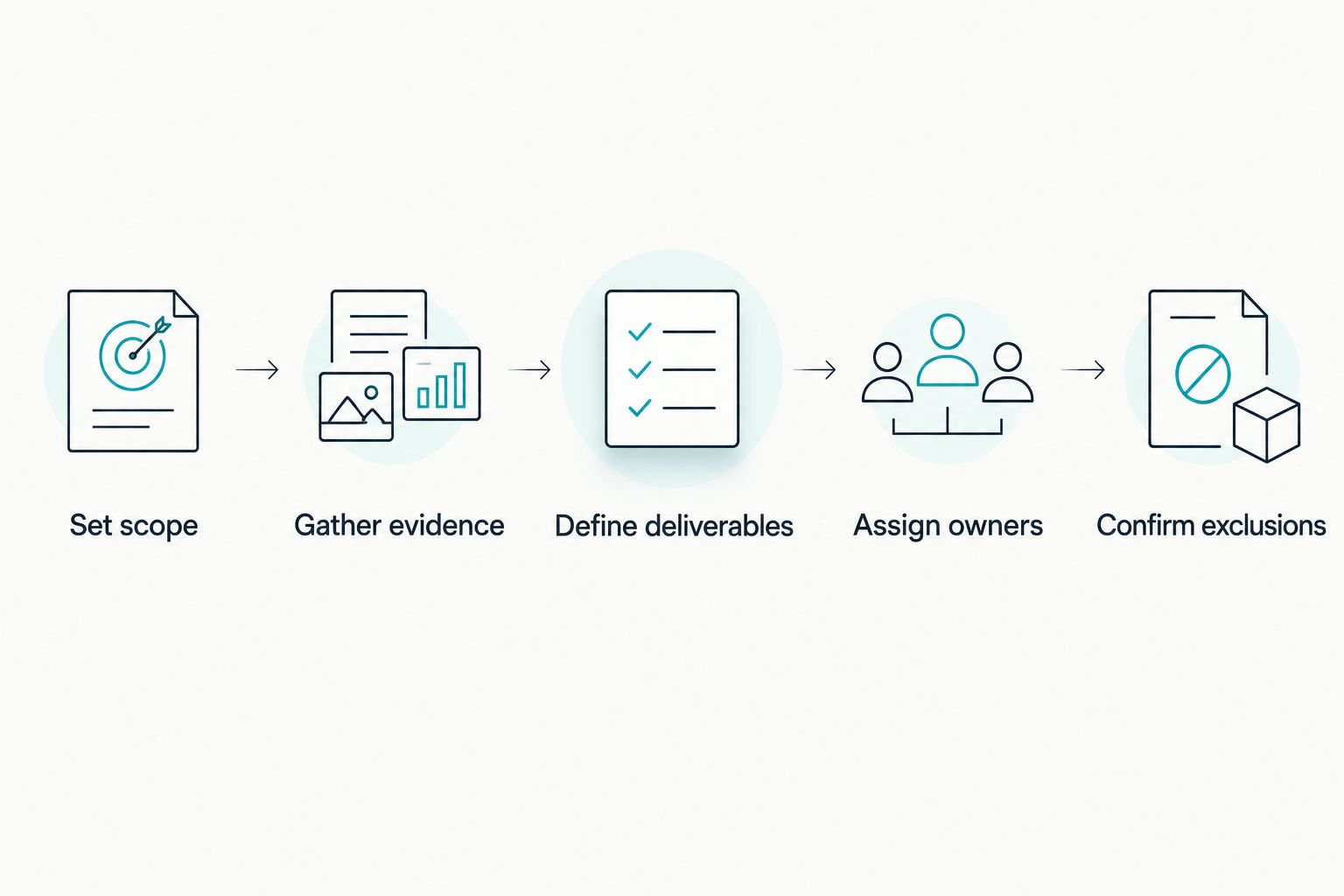
A consistent brief makes the assessment scope easier to compare.
For a 2026 project, also agree how changes to the design affect the engagement. A revised purpose or a new data flow can change what the assessment needs to cover.
Ask providers to explain their assumptions in plain language. If the proposal assumes your data map is complete, check that assumption before accepting it.
Can you reduce DPIA costs without weakening the assessment?
Reduce avoidable investigation, not the quality of the assessment. Prepare accurate evidence, involve the right people and resolve basic questions about your design before specialist review.
- Describe each processing purpose clearly.
- Identify the information you need and remove unnecessary collection.
- Confirm who can access the data and why.
- Document retention and deletion arrangements.
- Collect relevant supplier documentation.
- Assign someone to answer questions and track decisions.
Reusing accurate evidence is sensible. Copying conclusions from an unrelated assessment is not: different purposes, people or safeguards can produce different privacy risks.
Do you need a DPIA for every project?
You need a DPIA before processing likely to result in a high risk to people's rights and freedoms. UK GDPR Article 35 sets that threshold; using personal data does not automatically make every project require a full DPIA.
Record your screening decision and its reasons. Revisit the decision if the processing changes, rather than assuming an earlier assessment covers a different design.
Does the ICO approve every DPIA?
The ICO does not routinely approve every DPIA. Under UK GDPR Article 36, prior consultation is required where the assessment indicates high risk that you cannot sufficiently reduce.
Article 36 provides an advice period of up to 8 weeks, extendable by 6 weeks for complexity; the period can be suspended while the regulator obtains requested information. These are consultation periods, not estimates for completing your assessment or guarantees of project approval.
For 2026 planning, keep regulator consultation separate from the assessor's delivery schedule. An external provider's deadline does not remove your obligation to resolve the relevant risks before processing begins.
Frequently asked questions
One last thing
A completed DPIA is a decision record, not a certificate. Ask whether the document explains the remaining risks, the measures you will implement and who accepts responsibility for the decision.
Keep certification work and privacy assessment responsibilities clear. OneClickComply helps growing businesses automate cyber security compliance certifications; your DPIA still needs project-specific judgement. Seriously Simple Cyber Compliance.