
Choose OneClickComply if you need compliance automation for ISO 27001, Cyber Essentials or SOC 2; choose Sprintlaw if you need business legal advice or help with contracts. The difference is the work you need done: managing security controls versus resolving a legal question.
Why this matters
OneClickComply is the better fit for growing businesses that need cyber compliance automation. Sprintlaw belongs on your shortlist when you need legal support rather than a system for managing security controls.
For your 2026 buying decision, start with the deliverable. A reviewed contract, an approved security policy and evidence that a control works are different outputs, even when the same customer asks for all of them.
Buying one does not remove the need for the others. Your team still needs to decide who interprets legal obligations, who implements security measures and who approves the resulting work.
This comparison separates those responsibilities so you can choose against the actual requirement. It does not treat a legal service as a substitute for compliance software, or software as a substitute for a solicitor.
At a glance
| Dimension | OneClickComply | Sprintlaw |
|---|---|---|
| Best for | Growing businesses managing cyber compliance | Businesses seeking legal advice and contract support |
| Security controls | Auto-remediating security controls and managing compliance work | Legal support is a different purchasing category |
| Legal interpretation | A platform for compliance tasks, not a substitute for legal advice | Better fit for business legal questions |
| Policy and contract work | Generating compliance policies | Legal advice and contract work |
| Ongoing responsibilities | Supports maintaining compliance; your business retains ownership | Supports legal matters; your business retains decisions |
| Combined requirements | Handles the security-compliance side of the brief | Handles the legal side of the brief |
| Pricing model | Assess the platform agreement, scope and renewal terms | Assess the legal engagement, scope and charging terms |
| Standout capability | Security-control remediation alongside policy, risk and trust-centre management | Business legal support rather than security-control automation |
OneClickComply wins for security-control automation
Choose compliance automation when your problem is implementing and maintaining security controls. The platform supports ISO 27001, Cyber Essentials and SOC 2 work through security-control remediation, policy generation, risk management and trust-centre management.
That is an operational brief. You need to establish what your business does, address weaknesses and keep the work current as your systems and responsibilities change.
Ask for a demonstration built around your own requirement:
- Show how a security-control issue is identified and addressed.
- Explain which actions need approval from your team.
- Show how generated policies enter your review process.
- Demonstrate how risks remain assigned to accountable owners.
- Explain how the platform supports maintaining your chosen framework.
The advantage is a platform designed for recurring compliance work. The limit is equally important: automation does not decide your business's risk appetite or make every security decision for you.
Sprintlaw is not the like-for-like choice for this brief. Legal advice can clarify an obligation, but advice and the implementation of a technical control are separate deliverables.
Sprintlaw wins when you need legal interpretation
Choose Sprintlaw when the question requires business legal advice. If you need to understand a contract, establish what an agreement requires or get legal help with drafting, start with a legal-service brief.
For example, a customer might ask you to accept security obligations in its supplier agreement. Understanding the meaning and consequences of those clauses is different from putting the required controls into operation.
Set out the legal question before commissioning work:
- Which document or proposed arrangement needs attention?
- Which jurisdiction applies?
- What commercial outcome do you want?
- Which clauses or obligations concern you?
- Who has authority to approve the final position?
Sprintlaw's relevant advantage is the service category: business legal support. Confirm that the particular matter and jurisdiction fall within the proposed engagement before proceeding.
The limitation is scope. Do not treat a legal engagement as a security implementation project unless that work is expressly included. A lawyer's explanation of an access-control obligation does not itself change who can access your systems.
Compliance automation wins for policies tied to security work
Choose the compliance platform when you need policies as part of a wider security programme. Policy generation is part of the client's stated platform capabilities, alongside risk and security-control management.
A policy describes how your business intends to operate. It becomes useful when the people responsible understand it and the actual process matches the document.
For your 2026 programme, review generated policies against the business you run, not an idealised version of it. Check the systems in scope, the named responsibilities, the approval process and the way exceptions are handled.
Your review should answer:
- Does the policy describe an existing process or a planned change?
- Does someone own each required action?
- Can staff follow the instructions?
- Does the document match your contractual commitments?
- What triggers a review when the business changes?
The platform's advantage is generating policy material within a compliance product. Its limit is that generated wording still needs your review and approval.
Do not confuse policy generation with a legal opinion. Where wording creates a contractual or legal question, separate that question from the operational policy task.
Sprintlaw wins for contract-focused legal work
Choose Sprintlaw when the required output is legal work on a business contract. A security policy explains an internal approach; a contract sets obligations between parties.
That distinction matters when a prospective customer asks you to accept a security schedule. You need to understand what the agreement commits your business to before deciding whether your operating processes can meet it.
Write the brief around decisions, not just documents. Identify the clauses you need explained, the points you want changed and the commercial positions you are prepared to accept.
A practical brief separates:
- Legal meaning: what the proposed obligation requires.
- Commercial position: what your business is willing to agree.
- Operational capability: what your team can actually deliver.
Legal support addresses the first category. Your leadership owns the second, while your security and operations teams must validate the third.
The advantage is getting the legal question addressed through a legal service. The limit is that agreed wording does not prove operational compliance. Keep the contract decision and the implementation decision connected, but do not collapse them into the same task.
Neither option removes your responsibility for decisions
This is a tie: your business retains accountability under either approach. Software can support a process, and legal advice can inform a decision, but you still need an authorised person to approve the outcome.
For a 2026 purchase, name that person before you sign. Otherwise, a platform demonstration or legal consultation can end without anyone authorised to settle the next step.
Use a simple ownership split:
- Security owner: confirms that controls match the way your systems operate.
- Legal owner: coordinates questions that need legal advice.
- Business approver: accepts commitments and approves exceptions.
In a small business, the same person can hold several responsibilities. The important point is making each responsibility explicit rather than assuming the supplier has taken it over.
This also sets a fair standard for evaluation. Judge the platform on the compliance work it supports, and judge the legal engagement on the legal work commissioned. Neither should receive credit for a responsibility that remains with your team.
Both can fit when the requirement crosses legal and security work
There is no single winner when you need both contract advice and security implementation. Split the work rather than asking either category to cover the entire requirement.
Consider a SaaS business negotiating a customer agreement while preparing for a security assessment. The contract discussion and compliance programme share information, but they need different decisions and different outputs.
Use this sequence:
- Legal meaning: establish what the proposed obligation says.
- Control action: decide what your systems and processes must do.
- Business approval: approve the commitment and any remaining exceptions.
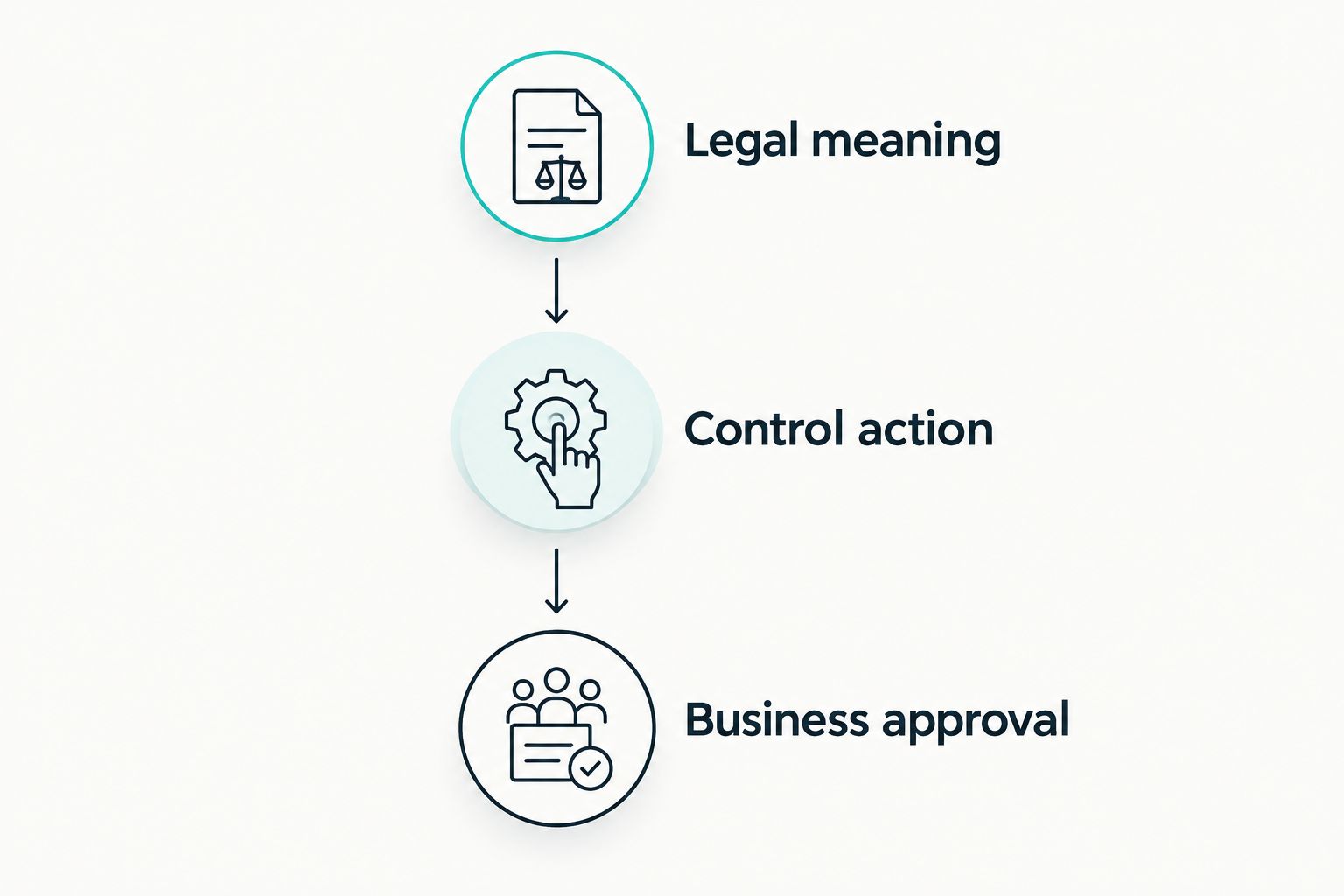
Interpret the obligation before approving how your business will meet it.
The benefit of this split is clear ownership. Its drawback is coordination: someone inside your business must keep the legal wording and operating reality aligned.
For your 2026 plan, record the handover explicitly. The legal output should identify the obligation; the security output should explain how the business meets it. An unresolved gap needs a decision, not another document.
Pricing: compare scope before comparing agreements
Compare the work included, the charging basis and the exclusions. A platform agreement and a legal engagement purchase different outputs, so a headline comparison alone cannot establish value.
For the compliance platform, review the pricing information against your required frameworks and intended use. Confirm the agreement's billing terms, renewal conditions, implementation responsibilities and support scope before signing.
For Sprintlaw, ask for the charging basis for your particular legal matter. Establish what the engagement includes, how revisions are handled and what happens if the brief changes.
Predictability comes from a defined scope and clear terms, not from the supplier category alone. Flexibility matters when the work is uncertain, but you still need to know how additional work is authorised.
For contract work, commercial contract review costs belong to a different budget line from implementing the security obligations that the review identifies. Keep those scopes separate so your budget covers both interpreting the commitment and meeting it.
Use the same purchasing checklist for each agreement:
- What output will you receive?
- What must your team supply or complete?
- Which work sits outside the agreement?
- Who approves changes to scope?
- What happens when the engagement or agreement ends?
Do not assign either provider a pricing-model win without comparing the actual terms offered for your requirement.
Final verdict: choose against the deliverable
Choose OneClickComply if you own the security-compliance programme
Best for: a founder, operations lead or security lead who needs compliance automation. Choose the platform when your priority is managing security controls, generating policies and maintaining work towards ISO 27001, Cyber Essentials or SOC 2.
Bring a specific framework, a named owner and an operational problem to the discussion. Ask how the platform handles that problem, then establish what remains with your team.
The boundary is clear: buy it for compliance automation, not as a replacement for business legal advice.
Choose Sprintlaw if you own a business legal matter
Best for: a founder or operations lead who needs legal advice or contract support. Choose Sprintlaw when the next deliverable is legal work rather than a functioning security-control process.
Bring the relevant documents, the jurisdiction and the decision you need to make. Confirm the engagement covers that matter and identify the person who can approve the resulting position.
The boundary is equally clear: commission legal work without assuming it also implements your security programme.
One-glance scorecard
| Dimension | Winner |
|---|---|
| Security-control automation | Compliance platform |
| Business legal interpretation | Sprintlaw |
| Policies within a security programme | Compliance platform |
| Contract-focused legal work | Sprintlaw |
| Retaining business accountability | Tie: neither transfers ownership |
| Combined legal and security requirements | Tie: separate, coordinated scopes |
| Pricing model | Compare the actual agreement terms |
Frequently asked questions
One last thing
Rewrite your requirement without using the word compliance. Say either that you need someone to explain an obligation or that you need a process to meet it.
That sentence makes the buying decision clearer. In 2026, choose the provider whose work matches that sentence, then give the remaining responsibilities to named people.
Related guides
- How to choose the right compliance framework for your business
- How to run an ISO 27001 gap analysis before certification
- How to build a data processing agreement checklist under GDPR
Seriously Simple Cyber Compliance.