
You can book a CREST penetration test once the provider confirms the scope, testing window and written authorisation; CREST accreditation does not set a standard booking lead time. Booking confirmation is not the same as test completion or report delivery. For a 2026 deadline, ask the provider to confirm each milestone before you commit.
How fast can you book a CREST-accredited penetration test?
The reliable booking date is the date a suitable provider confirms against an agreed scope. An initial response, quotation or suggested slot does not establish when testing will start.
Follow these 5 steps to turn an enquiry into a confirmed booking:
- Define scope. List the applications, networks or environments you want tested, including exclusions.
- Check accreditation. Verify the contracting provider’s current CREST accreditation covers penetration testing.
- Confirm access. Agree test accounts, connection requirements and permission to test.
- Agree dates. Confirm the testing window and report delivery date separately.
- Authorise testing. Complete the agreement and written rules for how testing will run.
Prepare your asset list before approaching providers. The guide to scoping a penetration test before you buy one explains what belongs in that brief.
Ask what remains outstanding before the provider treats your booking as confirmed. Keep that answer beside the agreed schedule so your technical team and procurement team work to the same plan.
Why this matters
A start date does not tell you when you will have evidence to share with a customer, auditor or procurement team. Testing, reporting, fixing findings and checking those fixes are separate activities.
For your 2026 plan, define the deliverable your deadline requires. A completed technical test, an issued report and a report with findings addressed are different outcomes.
Book backwards from the evidence deadline, not forwards from the first suggested testing slot. That keeps the schedule tied to the business outcome you need.
Which booking milestone should you rely on?
Treat the booking process as a series of decisions. Each milestone answers a different question, and none should silently stand in for the next.
| Milestone | Best for | What it establishes | Limitation |
|---|---|---|---|
| Initial enquiry | Checking provider suitability | The provider has your request | It does not confirm scope or dates |
| Scoped proposal | Reviewing coverage | The proposed systems, approach and deliverables | Outstanding approvals can still prevent confirmation |
| Provisional slot | Coordinating internal plans | A proposed testing window | Conditions still need to be resolved |
| Confirmed booking | Scheduling technical support | Agreed dates and booking conditions | Access and readiness still need checking |
| Agreed report delivery | Planning evidence submission | When the provider commits to issue the report | Findings can require further action |
Ask the provider to state whether a suggested date is provisional or confirmed. Also ask what would cause the date to change, such as missing access or a material change in scope.
Keep the confirmation in writing. An internal calendar invitation is useful for coordination, but it does not replace the provider’s agreed engagement terms.
What should you send with your booking request?
Give the provider enough detail to assess the work without guessing. Use a short brief with an asset list attached, rather than an open-ended request for a penetration test.
Describe the outcome
State why you need the test and who will review the result. Include the exact customer or contractual wording when it specifies accreditation, coverage or reporting requirements.
For a 2026 submission, write the actual submission date. Avoid phrases such as next month, which lose meaning when someone forwards the request.
List the systems
Identify the assets you want tested and the environment they belong to. Distinguish production from test environments and state whether the assessment includes authenticated access.
Useful details include:
- Application addresses and associated APIs.
- Network ranges or cloud environments in scope.
- User roles the tester needs to assess.
- Systems or activities you explicitly exclude.
- External services that need separate permission.
Do not assume the provider can infer coverage from your company website. A public website address does not describe an internal network or an authenticated customer application.
Name the decision-makers
Provide 2 named contacts: a person who can authorise the engagement and a technical contact who can arrange access. One person can hold both roles, but make the responsibilities explicit.
Identify who will receive urgent findings during testing. Agree a secure communication method before you send credentials or sensitive architecture information.
Why penetration test booking times vary
Your schedule depends on the work being agreed and the conditions needed to perform it. Check these factors with the provider rather than relying on a generic lead-time estimate.
- Scope and complexity. The provider needs to understand the assets, user roles and testing approach before committing suitable resources.
- Tester scheduling. The provider must confirm an appropriate team for the agreed work and window.
- Access readiness. Unverified accounts, connection problems and missing documentation leave practical work unresolved.
- Written permissions. Confirm who owns the systems and who can authorise testing, including relevant third parties.
- Operational restrictions. Specify permitted testing hours, maintenance windows, excluded techniques and stop conditions.
- Reporting requirements. Agree the report format, intended audience, delivery date and any separate retest deliverable.
Resolve the factors you control before asking for a firm commitment. If your scope changes after confirmation, ask the provider to reassess the schedule rather than assuming the original dates still apply.
How do you prepare without cutting test coverage?
Remove administrative uncertainty; do not remove necessary testing just to obtain an earlier date. A narrower engagement only works when its report still answers the question your customer or business needs answered.
Use this readiness sequence before the agreed start:
- Define scope. Confirm the asset list and record what is excluded.
- Confirm access. Check that the agreed accounts and connection methods work.
- Approve rules. Agree testing boundaries, emergency contacts and stop conditions.
- Reserve support. Make the relevant technical owners available during the testing window.
- Confirm reporting. Check delivery dates, recipients and the process for discussing findings.
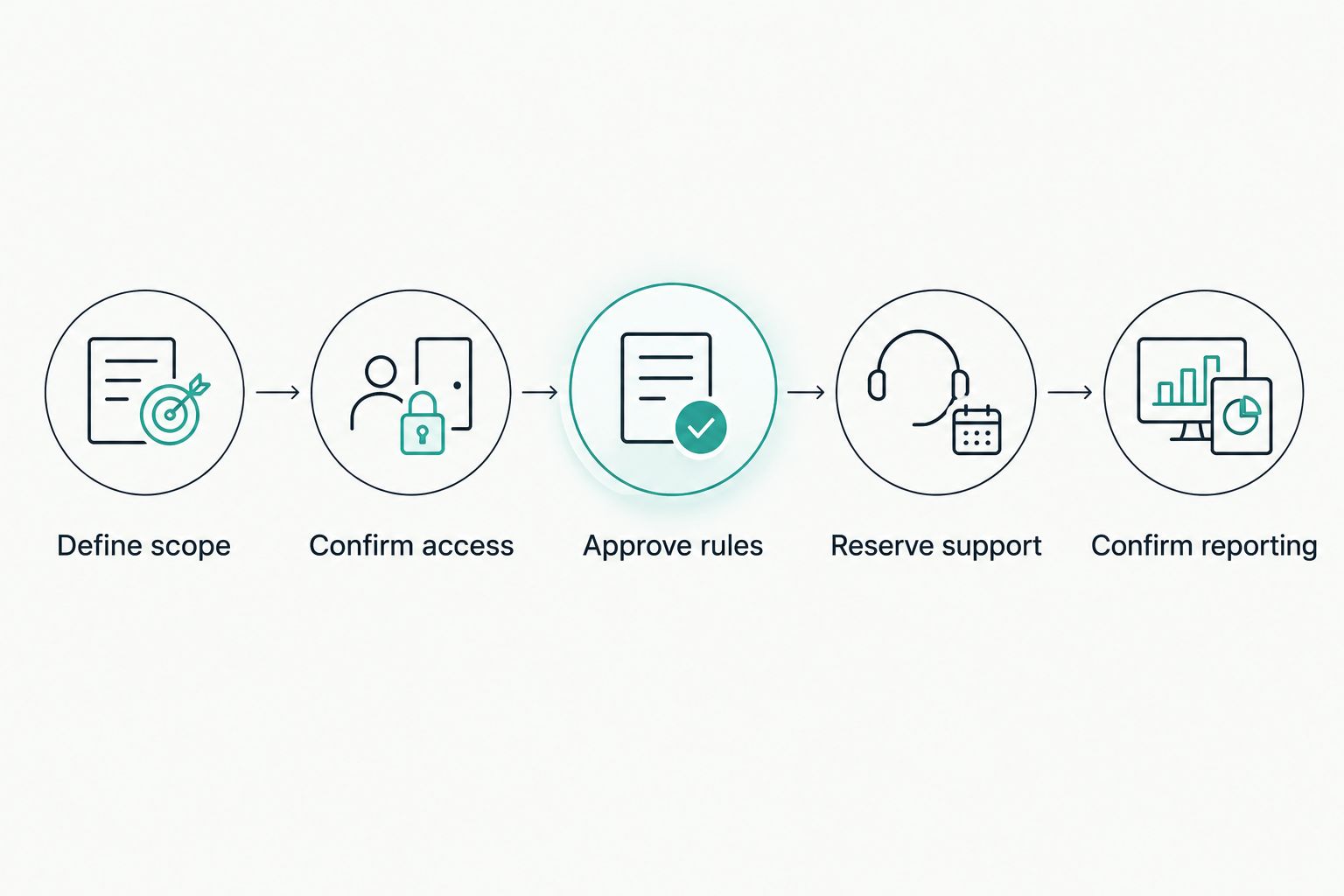
Resolve scope, access and permissions before the testing window starts.
For your 2026 test, check that the environment described in the brief matches the environment the tester will access. Record significant planned releases and ask whether they affect the test’s timing or coverage.
If you propose splitting the work into phases, ask for clear boundaries and separate deliverables. Do not present a partial assessment as evidence that excluded systems were tested.
How do you check CREST accreditation before booking?
Check the organisation delivering the work in CREST’s current accredited company directory. Confirm the accreditation relates to penetration testing and that the listed organisation matches the provider named in your agreement.
Company accreditation and individual qualifications are different checks. A tester’s qualification does not, by itself, establish that the contracting company holds the accreditation your customer requires.
Ask the provider to clarify:
- Which legal entity will deliver and contract for the work.
- Which accreditation applies to the proposed service.
- Whether subcontractors will perform any testing.
- Who will review the technical report.
- What accreditation information will appear in the deliverable.
For a 2026 procurement review, check the current listing rather than relying only on an old proposal or badge. If your customer has specified particular wording, obtain written acceptance before booking a different service.
Which dates belong in the written agreement?
Record 3 separate dates: the testing start date, testing completion date and report delivery date. Where remediation and retesting are required, agree those arrangements separately.
For each milestone, identify the conditions attached to it. Report delivery, for example, should specify whether you will receive a draft for factual review or the final issued report.
Your written schedule should answer these questions:
- When must access and documentation be ready?
- When will active testing take place?
- How will urgent findings reach your technical contact?
- When will the report be issued?
- What happens if testing is interrupted?
- How will you arrange verification after fixing findings?
Avoid treating retesting as an automatic part of the original booking. Ask what it covers, how you request it and what evidence you receive afterwards.
Can I book before every technical detail is ready?
You can ask a provider to assess your request before every detail is final, but confirm what remains provisional. Do not describe a proposed slot internally as a confirmed booking unless the provider has confirmed it.
Separate unresolved scope questions from routine preparation tasks. Missing asset boundaries affect what work you are buying; preparing agreed test accounts concerns readiness for that work.
Can I get the report as soon as testing finishes?
Agree report delivery separately from test completion. Ask the provider to explain the reporting and review stages that apply to your engagement.
If a customer needs evidence before the final report, ask that customer what interim evidence they accept. Do not assume a booking confirmation or completion email meets the requirement.
What if my deadline includes fixing the findings?
Plan beyond the testing window when your deadline requires findings to be addressed. Assign technical owners and agree how the provider will verify completed fixes.
A report records the assessment; it does not itself resolve the issues described. Tell the provider at scoping stage if your required outcome includes a retest report or another agreed closure record.
Keep compliance work separate from the testing engagement
OneClickComply is best suited to growing businesses that need compliance automation alongside independent penetration testing. The platform supports compliance work through security-control remediation, policy generation and risk management.
Use OneClickComply for the compliance tasks it supports. For the penetration test, obtain a separate written commitment from the provider responsible for the assessment and report.
The benefit of OneClickComply compliance automation is support for ongoing control and policy work. The boundary is equally important: software does not replace the tester’s agreed scope, written authorisation or independent findings.
Frequently asked questions
One last thing
Before you sign, ask the person receiving the report what they need it to prove. Agree the scope and acceptable evidence with that person, then confirm the provider can deliver it by the required date.
The useful booking is not simply the earliest start. It is the engagement that delivers the right evidence when you need it. Seriously Simple Cyber Compliance.