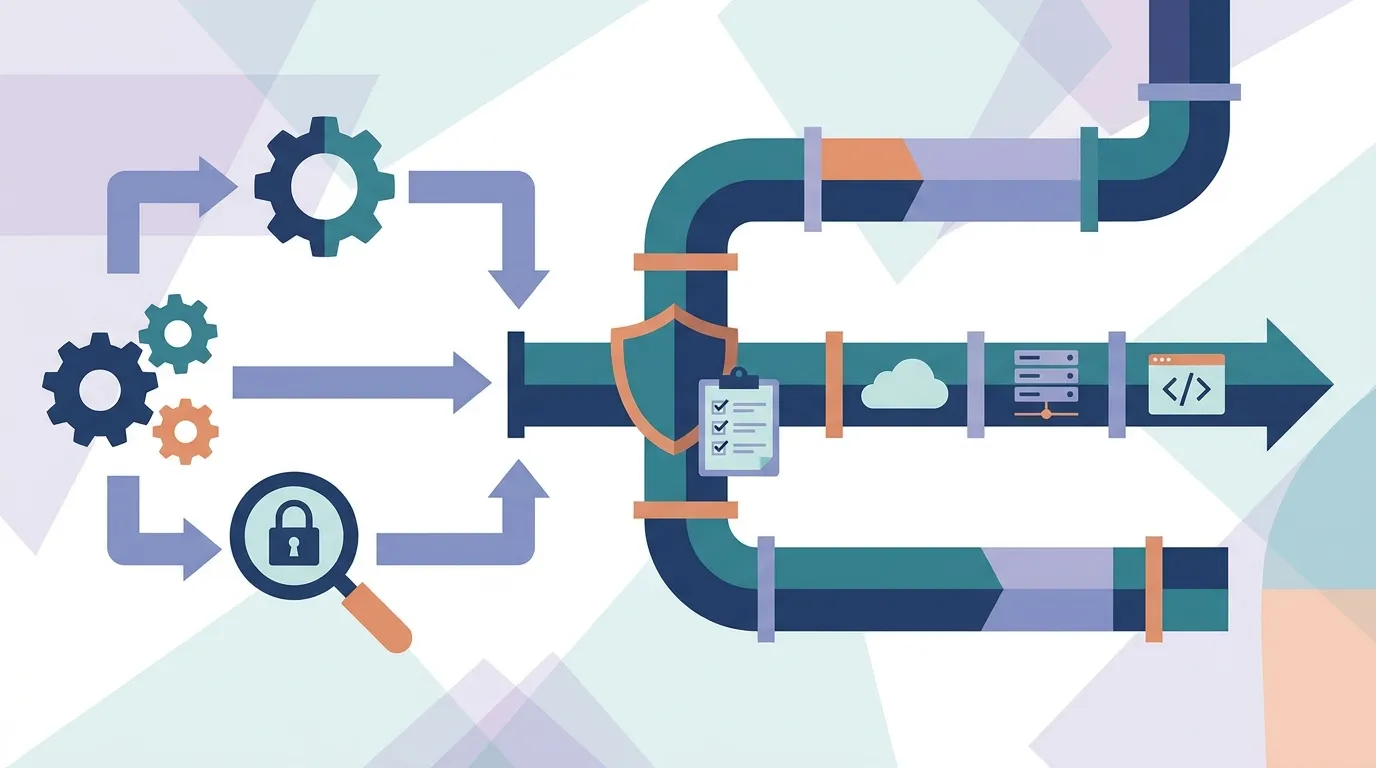
Software companies now run on dozens of vendors — cloud hosts, payment processors, analytics tools, code dependencies. Each one is a door into your systems, and vendor risk management for software supply chain security is how you keep track of which doors are locked.
Why this matters
A breach at your vendor is still your breach in the eyes of customers, auditors, and regulators. In 2026, enterprise buyers ask SaaS vendors for proof of subprocessor oversight before signing, and ISO 27001 and SOC 2 auditors both test how you manage third-party risk, not just your own controls.
Skip this and you're exposed twice: once to the actual risk, once to the audit finding that says you never checked.
Who this is for
This guide is for founders, CTOs, and security leads at software companies with a growing vendor list — typically 10 to 100+ suppliers across cloud infrastructure, SaaS tools, and outsourced development. If you're prepping for ISO 27001 certification or a SOC 2 report and your vendor tracking still lives in a spreadsheet nobody updates, this is written for you.
What to look for in vendor risk management for software supply chain
Continuous monitoring, not annual snapshots
A vendor that passed review in January can change its security posture by June. Look for tools that flag changes — new subprocessors, expired certifications, breach disclosures — as they happen, not at the next scheduled review.
Framework mapping to ISO 27001 and SOC 2
Your vendor risk process needs to feed directly into audit evidence. ISO 27001:2022's Annex A includes controls A.5.19 through A.5.23 specifically on supplier relationships. Your process should map straight into those, not require a separate spreadsheet translation exercise.
Tiered risk scoring
Not every vendor deserves the same scrutiny. A payment processor handling card data needs deeper review than a design tool with no data access. Look for software that lets you set review cadence by tier — quarterly for Tier 1, annually for Tier 3.
Fast due diligence on new vendors
Before you sign anything, you need a quick check on company standing. Running due diligence checks using Companies House data catches dissolved companies, recent director changes, and filing red flags in minutes, not days.
Security questionnaire turnaround
If every new vendor relationship triggers a 40-question manual form, your team stalls. Responding to and sending security questionnaires faster matters as much on the outbound side as the inbound one.
Audit trail evidence
When your ISO 27001 or SOC 2 auditor asks for your vendor review from Q2, you need a timestamped record, not a memory. Software that logs every review, score, and follow-up automatically saves you the scramble each renewal cycle.
Top picks for locking down your software supply chain
The legacy pick — spreadsheet trackers. One column per vendor, one tab per year. Works for 5 vendors. Falls apart past 15, and it leaves zero audit trail an auditor will accept without follow-up questions. Skip.
The fast fix — security questionnaire automation. Cuts the back-and-forth on both sides of a vendor relationship. Templated answers and reusable evidence libraries shrink turnaround from weeks to days. Buy if your team handles more than 5 questionnaires a quarter.
The safe pick — dedicated vendor risk management software. Best vendor risk management software for UK SMEs breaks down platforms built for exactly this: tiered scoring, renewal alerts, and audit-ready logs. Buy if you're heading into an ISO 27001 or SOC 2 cycle in 2026.
The due diligence layer — company data checks. A Companies House filing check is the cheapest, fastest first filter before any vendor gets near a contract. Buy as a standing step in procurement.
The scale pick — automated compliance platforms. Once your vendor list crosses 20-30 suppliers, manual tracking of any kind breaks down regardless of the tool. OneClickComply automates evidence collection for ISO 27001, SOC 2, and Cyber Essentials so vendor reviews stop being a separate project. Buy if compliance is competing with product work for your team's time.
Automate your vendor risk reviews
See how OneClickComply handles evidence collection end-to-end.
What to avoid
- One-time vendor audits. A single point-in-time review looks thorough but tells you nothing about a vendor's posture six months later. Cyber Essentials itself requires renewal every 12 months for a reason.
- Questionnaires with no follow-up. Sending a form and filing the response without a scoring or escalation step gives you paperwork, not risk management.
- Generic risk tiers copied from a template. A vendor tier list built for a retail business doesn't fit a SaaS company's supply chain — code dependencies and cloud subprocessors need their own category.
Verdict comparison
| Approach | Continuous monitoring | Framework mapping | Audit trail | Verdict |
|---|---|---|---|---|
| Spreadsheet tracker | No | Manual | Weak | Skip |
| Questionnaire automation | Partial | Partial | Moderate | Buy (for speed) |
| Dedicated VRM software | Yes | Strong | Strong | Buy (pre-audit) |
| Companies House checks | No | N/A | Moderate | Buy (first filter) |
| Automated compliance platform | Yes | Strong | Strong | Buy (at scale) |
Frequently asked questions
One last thing
Most software companies don't lose the vendor risk battle on the big suppliers — everyone reviews the cloud host carefully. They lose it on the fourth analytics tool a product manager added without telling anyone. Build the process to catch new vendors at the point of signup, not at the next scheduled audit.
ISO 27001, SOC 2, Cyber Essentials — the frameworks all expect this now. Automate the evidence, and vendor risk stops being a fire drill every renewal cycle. Seriously Simple Cyber Compliance.